Bags, Super Sacks, Totes, or Flexitanks: Choosing the Right Packaging Format
The right packaging format has less to do with total volume and more to do with what your forklift, hopper, or spreader can actually handle.
September 22, 2026 · 4 min read
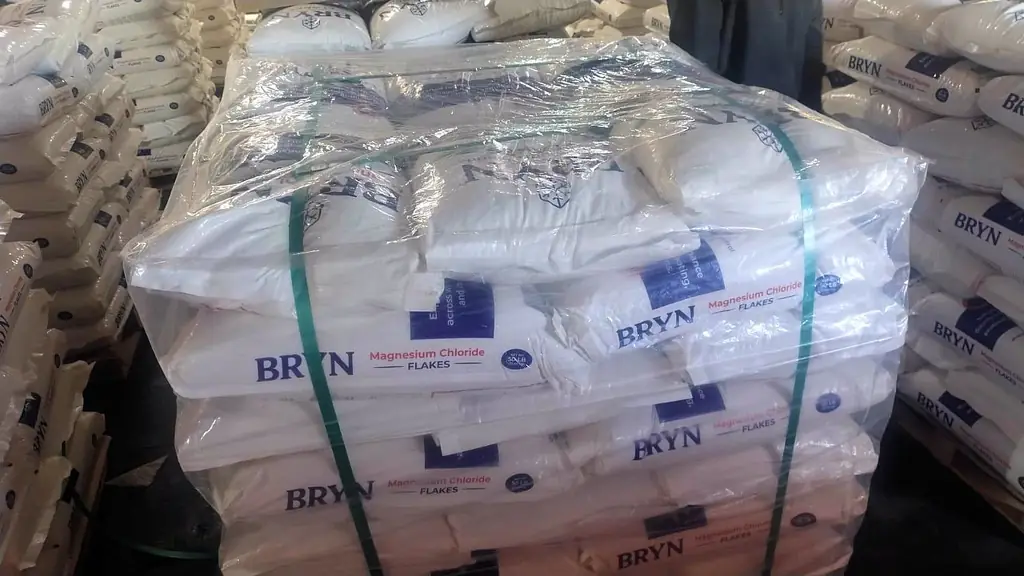
The same magnesium chloride or calcium chloride can arrive at a site four different ways, and picking the wrong one turns a simple delivery into a handling problem. This is a packaging question before it is a chemistry question, and it is worth working through before the order goes in rather than after the truck shows up and nobody on site has the right equipment to move it.
Four formats, one set of products
Bulk chloride ships as 50 lb heat-sealed bags, palletized 48 to a pallet, as one-metric-ton (2204 lb) Super Sack totes, as 275 gallon IBC totes for the liquid brine form, or as 4,000 gallon Flexitanks for large liquid volumes shipped by container. Each one is built around a different scale of operation and a different set of handling equipment, and all of it ships factory-direct by rail, container, or truck rather than sitting in a regional warehouse first.
50 lb bags
Bags are the format for a crew without a forklift or loader on site, or for a spreader that is set up to be hand-fed or hopper-fed from bagged material. They are also the easiest format to store: a shrink-wrapped pallet of bags fits under a canvas storage tent or in a dry corner of a warehouse without any special containment, and a partial pallet can be broken down and moved by hand when a full one is more than a small job needs. Forty-eight bags per pallet keeps the math simple when you are ordering against a known usage rate.
Super Sack totes
A one-metric-ton Super Sack needs a forklift or loader to move, and it is built for sites that already handle bulk material that way, feeding a hopper or a bulk spreader directly rather than hand-loading bag by bag. It is the middle ground between small-crew bagged product and full liquid-tote volumes, and it is a common choice for construction and municipal operations with material-handling equipment already on hand, since it cuts down the number of individual units a crew has to break open compared to an equivalent weight in 50 lb bags.
275 gallon IBC totes
This is the liquid brine format, available in either magnesium chloride or calcium chloride brine, shipped as a forklift-ready, palletized cage tote. It suits spray-truck operations, anti-icing rigs, and arena dust-control crews that are set up to draw liquid directly from a tote rather than mix their own brine from dry product on site, and the caged design makes it practical to store several at once in a yard between applications.
4,000 gallon Flexitanks
Flexitanks move liquid brine at container scale, shipped by container lot and typically decanted into a site's own storage or spray equipment on arrival. This is the format for operations large enough that filling individual IBC totes one at a time would slow down the receiving process, and it is shipped, like everything else, direct from the manufacturer by rail, container, or truck rather than through a distribution warehouse.
Storage between deliveries
Packaging format also decides how a delivery gets stored once it arrives. Bagged product handles the most simply, since a shrink-wrapped pallet can sit under a canvas storage tent or in any dry, covered corner of a yard without special containment. Super Sack totes need enough clearance for a forklift to set them down and pick them back up, and dry product of either kind should stay off wet ground and out of standing water regardless of format. Liquid brine in IBC totes or Flexitanks needs secondary containment appropriate to the volume on hand and a location where a leak would not reach a waterway or drain, which is worth planning before the delivery date rather than improvising on the day the truck arrives.
Matching format to your equipment
Work backward from what is already on your site rather than forward from how much product you think you need. No forklift and a small crew points toward bags. A forklift or loader already feeding a hopper points toward Super Sacks. A spray rig or anti-icing truck points toward IBC totes. A large operation receiving by the container points toward Flexitanks. Getting this decision right before ordering avoids the scenario where a site takes delivery of a format its equipment was never set up to move, and it is a question worth raising when a bulk quote is requested rather than after the shipment method has already been locked in.
It is also fine to mix formats across a single site if different crews or different equipment need different things: a maintenance shop running a small spreader might draw from bags while a paved-lot spray operation on the same property runs off an IBC tote. The formats are not mutually exclusive, and matching each crew to the format that fits its equipment beats standardizing on one format across an operation that does not actually handle material the same way everywhere.
Bryn-It, (425) 923-7909
Call (425) 923-7909More articles
Magnesium Chloride or Calcium Chloride: Choosing the Right Deicer for Your Site
Both products melt ice and knock down dust, but they get there by different routes, and the route matters once the temperature drops.
Dust Control on Haul Roads and Arenas: What Actually Stops the Dust
Water evaporates in hours. A hygroscopic treatment keeps pulling moisture back into the surface long after the truck has moved on.