What to Check on a Certificate of Analysis Before You Accept a Load
A Certificate of Analysis is not paperwork for the file. It is the one document that tells you what is actually in the tote you just signed for.
September 22, 2026 · 3 min read
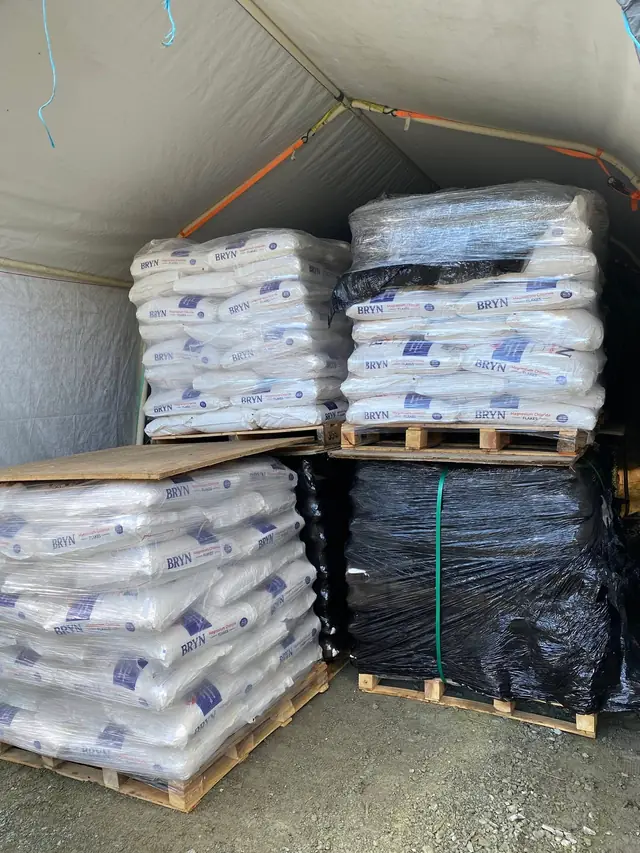
A bag or a tote label tells you the product name. It does not tell you the actual tested specification of the lot sitting on your dock. That is what a Certificate of Analysis is for, and skipping past it because the label already says calcium chloride or magnesium chloride is how a buyer ends up with a batch that does not perform the way the last one did.
Why the document matters more than the label
Bulk minerals are a manufactured product, and manufactured lots vary within their specified range even when nothing on the outside of the packaging changes. A Certificate of Analysis is issued per container lot, and it is the record that says what the tested purity or concentration actually was for the specific material you received, not a general figure for the product line. Two shipments of the same labeled product, produced at different times, are not guaranteed to test identically, which is exactly why the certificate exists as a lot-specific document rather than a one-time spec sheet.
What a Certificate of Analysis covers
For calcium chloride, that means the tested purity figure for the lot, which should sit within the 94 to 97% range specified for the mini-pellet prill and pellet forms. For magnesium chloride, it means confirming the flake or brine concentration, 47% flake or 40% brine, matches what was ordered. If a figure on the certificate looks off from what you expected, that is worth a call before the material goes into use, not after it has already been spread on a road or mixed into a spray tank.
What a Safety Data Sheet covers
The SDS is the separate document that confirms hazard classification, handling and storage guidance, and disposal information. Both magnesium chloride and calcium chloride are fully water soluble and classified as non-hazardous under OSHA standards, and a full SDS is provided with every order regardless of format or volume. Keep it with your site safety records, not just in an email inbox, since it is the document an inspector or a new crew member would need if a question ever came up about how the product should be stored or handled.
Cross-checking against your application
For some jobs the exact spec on the CoA is a genuine technical requirement, not a formality. Oilfield work such as well completion fluid, shale stabilization, or sealing well casings depends on the product meeting a specific purity and form. Tractor tire ballast, dust suppression, and general de-icing are more forgiving, but even there, confirming prill versus pellet versus flake against what your equipment expects avoids a handling mismatch on delivery day, and confirming the concentration on a brine shipment avoids diluting or over-concentrating a spray mix without realizing it.
Keeping records across multiple deliveries
A single Certificate of Analysis is useful on its own, but the real value shows up when a site keeps every one it receives, organized by delivery date and lot number, and compares them over time. A pattern of drift in a tested figure across several deliveries is worth a conversation with the supplier even if any one lot on its own falls within range. That kind of comparison is only possible if the documents are actually filed somewhere a buyer can find them again, rather than living in whichever inbox happened to receive them the day the truck arrived.
Before you sign for the load
- Confirm the Certificate of Analysis lot number matches the shipment in front of you
- Confirm the product form, flake, brine, prill, or pellet, matches what was ordered
- File the SDS with your site safety records the same day it arrives
- Call the supplier directly if any figure on the certificate does not match expectations
Both documents ship with every order and per container lot, so there is no reason to accept a load without them. If anything on either document is unclear, that is a question for the supplier directly, before the material is unloaded, not after it has already gone into use on site. A quick call at the point of delivery is a far smaller interruption than reworking a job because a lot did not perform the way the last one did.
Bryn-It, (425) 923-7909
Call (425) 923-7909More articles
Magnesium Chloride or Calcium Chloride: Choosing the Right Deicer for Your Site
Both products melt ice and knock down dust, but they get there by different routes, and the route matters once the temperature drops.
Dust Control on Haul Roads and Arenas: What Actually Stops the Dust
Water evaporates in hours. A hygroscopic treatment keeps pulling moisture back into the surface long after the truck has moved on.